
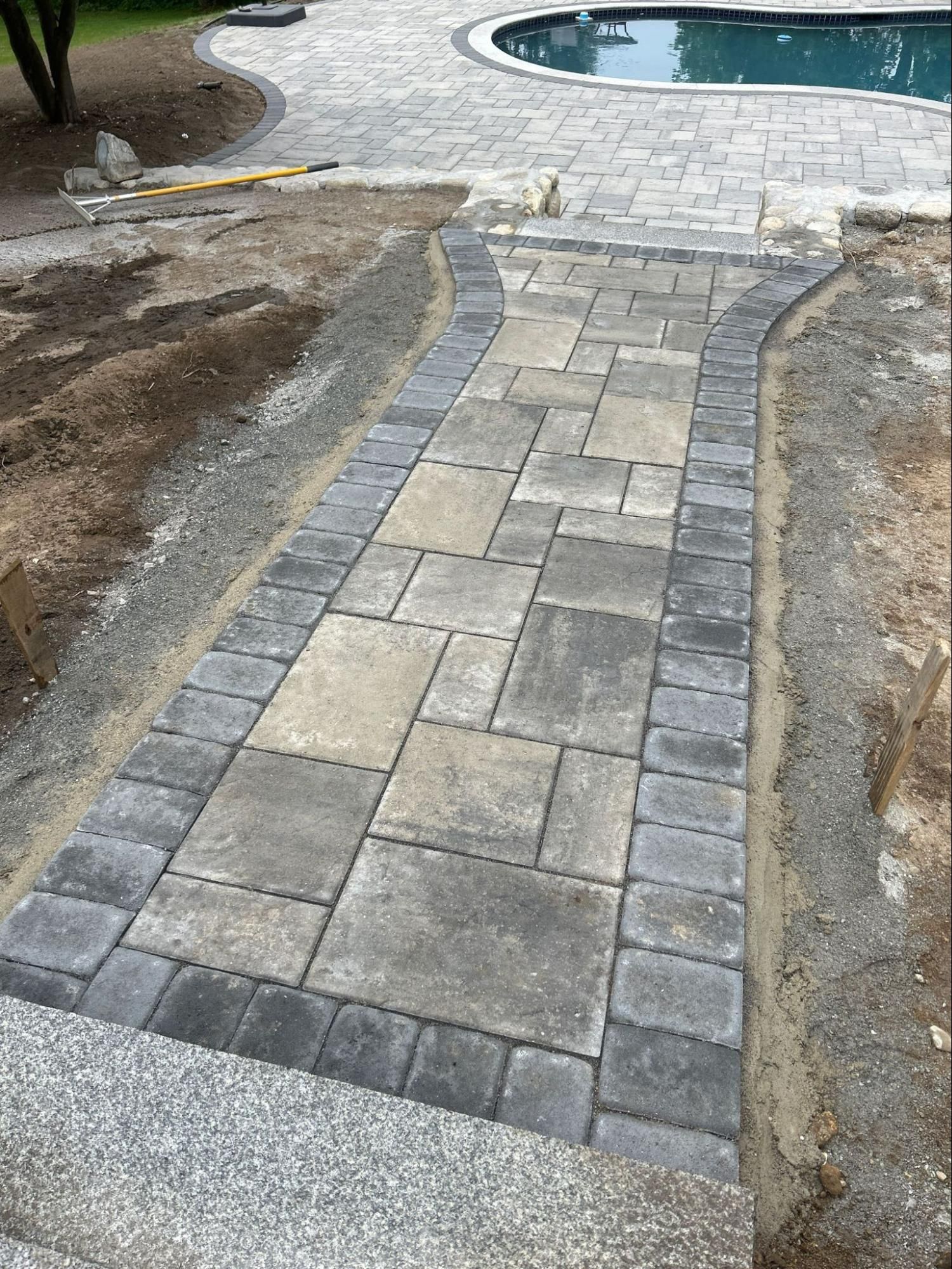
How to Protect Your Patio and Pavers Before Winter in Andover, MA
Cookouts, bare feet, furniture, sun, and heavy rain all take a toll on a patio over the summer, and now the Andover forecast is turning cold. Before the first hard freeze sets in, your patio and pavers deserve a little attention. What you do over the next few weeks decides whether you step outside next April to a solid, level surface or a cracked and heaved one. Here is how to winterize your patio in Andover, MA, one step at a time, so your hardscape comes through a New England winter in good shape.
Why do New England winters damage pavers?
Most winter damage to pavers comes down to water and freezing temperatures working together. Moisture works its way into the joints between pavers and into any hairline crack in the surface. When the temperature drops, that water freezes and expands, prying stones apart and lifting them off their base. Andover runs through dozens of these freeze thaw swings between November and March, and each one widens the gap a little more.
Melting snow, clogged drainage, and shaded corners that stay damp all make it worse. North facing sections and spots under tree cover stay frozen longest, so they cycle hardest. A patio that looked flawless in September can lift noticeably by March if water had somewhere to collect. The same cold that heaves your pavers also stresses the shrubs and perennials framing the patio. UMass Extension explains how cold affects landscape plants, and the plantings around your hardscape need fall care too.
Prep the patio and the beds around it in the same trip outside. A patio built on a solid, well drained base holds up far better, which is why the base is the first thing a professional checks when something starts to move.
Clean the Surface Before the First Freeze
Clearing the surface helps it drain and dry before the cold sets in. Leaves, acorns, and dirt that sit in the joints hold water against the stone through every freeze, and they feed moss, weeds, and staining. Wet leaves are the worst offender. Left in place, they break down into a slick, staining mat that holds moisture right where you least want it and invites moss to take hold by spring.
Before the cold locks in, take an afternoon to:
- Sweep off all leaves and debris, including the joints and edges
- Pull any weeds or moss growing between the pavers
- Clear the corners and low spots where damp material collects
- Rinse the surface and let it dry fully on a mild day
One more pass pays off: clear the gutters and downspouts above the patio so melting snow drains away from the stone instead of sheeting across it and refreezing overnight.
What should you check on your pavers before the freeze?
The sand in your joints is what locks the pavers together. Many patios use polymeric sand, which hardens to hold stones in place and block water. Over a summer of rain and foot traffic, some of it washes out, and open joints let water and movement straight into the base. Press a screwdriver into a few joints. If the sand gives easily or crumbles out, it has broken down and should be refreshed before the wet season.
Walk the patio and look for:
- Joints that sit low or have washed out
- Pavers that rock, shift, or sit higher than their neighbors
- Edge restraints that have pulled loose along the border
- Low areas where water pools instead of running off
A sunken or shifting section only gets worse once it starts to heave under ice. If you see real movement, it is far cheaper to correct before winter than after. Our patio and hardscape team has built patios across Andover since 2003 and can tell you whether the base is the issue.
Guard Against Freeze Thaw Damage
Once the surface is clean and the joints are sound, a few more steps keep moisture from doing its worst:
- Keep water moving away. Make sure the patio drains to the side and that no downspout empties onto it. Standing water is the single biggest cause of freeze damage.
- Consider a fall sealer. Some Andover homeowners apply a paver sealer before winter to add a layer of protection against moisture and stains. If you go this route, seal on a dry stretch while daytime temperatures are still mild, and follow the product directions closely.
- Store furniture and planters. Move cushions, tables, and pots into the garage or shed. Heavy planters left on the stone trap moisture and can crack both the pot and the surface under them.
- Choose the right ice melt. When ice forms, reach for a paver safe ice melt instead of rock salt, which can pit and discolor the stone. Shovel with a plastic edged blade and skip the metal ones that chip pavers.
Should you repair your patio before winter or wait?
Small problems only get worse over the winter. A hairline crack, a heaved paver, or a sunken corner will spread under snow load and repeated freezing, and a failing step or retaining wall near the patio becomes a safety issue once it ices over. Snow piled on an already cracked paver forces water deeper every time it melts and refreezes, so a crack you could fill today can split a stone by February.
Pay special attention to the seams where the patio meets steps, a walkway, or the foundation. Those transitions move first and let water travel underneath, so catching them early keeps a small fix from turning into a rebuild.
Fixing these before the ground freezes usually costs less than waiting. T&B has designed and built patios, walkways, and retaining walls throughout Andover for more than 20 years, and also provides winter services once the snow arrives. Larger repairs and rebuilds can be financed through Enhancify, which spreads the cost without pushing the work to spring.
A few hours of prep in October and November saves you a full spring of repairs. If your patio is showing cracks, pooling water, or shifting pavers, have it looked at before the freeze settles in. Request a free estimate or call (978) 296-5290, and head into winter knowing your hardscape is ready for it.
Patio Winterizing FAQ
How do you winterize pavers in Andover, MA?
Clear the joints of leaves and debris, refresh any polymeric sand that has washed out, keep water draining away from the surface, store furniture and planters, and fix cracks or shifting before the freeze. For low spots, heaving, or a failing base, have it checked before the ground freezes.
Should you seal pavers before winter?
Sealing is optional. Some homeowners add a fall sealer for extra protection against moisture and stains. If you seal, pick a dry, mild day and follow the directions so it cures before temperatures drop.
What ice melt is safe for pavers?
Use a paver safe product rather than rock salt, which can pit and discolor stone. Spread it sparingly and clear slush with a plastic edged shovel so you do not chip the surface.