
How to Winterize a Koi Pond in Andover, MA
Koi handle an Andover winter outdoors just fine, as long as the pond is set up for it. They slow down, settle near the bottom, and wait out the cold. Your job is to get the pond ready before it freezes over. Here is how to winterize a koi pond in Andover, MA, step by step, so your fish come through to spring.
Clean the Pond Before the First Freeze
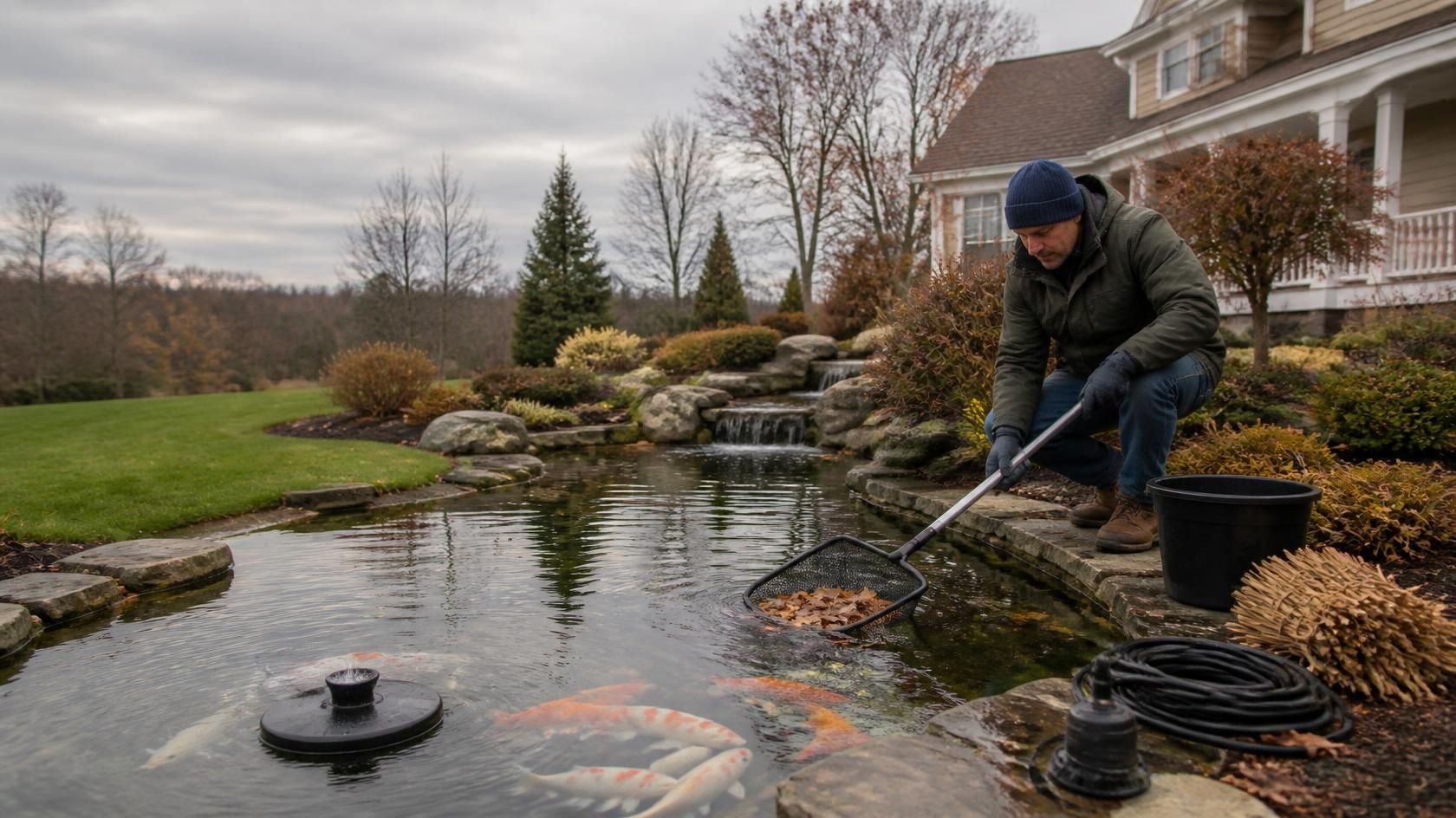
Start by clearing out everything that will rot under the ice. Fallen leaves, dead plant stems, and muck on the bottom all break down over the winter, and that decay pulls oxygen out of the water right when your fish need it most. Clearing it out in the fall means less decay through the cold months and more oxygen left for your fish.
Before the first hard freeze:
- Skim out fallen leaves, and net the pond if trees hang over it
- Remove debris and muck from the bottom with a net or a pond vacuum
- Cut back hardy marginal plants and move them to the deepest shelf
- Pull tropical plants and overwinter them indoors
A pond net stretched over the water through leaf season saves you most of this work, since it catches the leaves before they ever sink and start to break down.
When should you stop feeding koi in winter?
Stop feeding once the water drops below about 50 degrees. Check it with a pond thermometer rather than going by the calendar. Below that point a koi’s metabolism slows so much that food sits in the gut and rots instead of digesting, which can make the fish sick. As the water cools through fall, switch to a wheat germ food that is easier to digest, then stop feeding entirely once you reach the 50 degree mark.
How do you keep koi alive under the ice?
The real winter danger for koi is low oxygen under a sealed sheet of ice. When the surface freezes solid, fresh oxygen cannot get in and the gases from decaying matter cannot get out. Pond specialists at Penn State Extension call this a winterkill, and it is the single biggest risk your pond faces in an Andover winter.
The fix is to keep a hole open in the ice so the water can breathe.
Through the coldest weeks:
- Run a floating deicer to hold a small hole open in the ice
- Add an aerator with the air stone set on a shallow shelf, not the deep bottom
- Never break or smash the ice, which sends a shockwave that can kill your fish
- Brush snow off part of the surface so a little light still reaches the water
Check the opening every few days through the hardest cold snaps. If a storm seals it over, melt it open gently by setting a pot of hot water on the surface until it sinks through. Do not chip or hammer at the ice, since the shock travels through the water to the fish.
Should you run the pump through winter?
In a mild climate you could leave the main pump running, but Andover winters get cold enough that most pond owners shut the system down. A pump pushing water over a waterfall in a deep freeze can supercool the whole pond and ice up fast. The safer approach here is to pull the main pump, drain the waterfall and any outside plumbing so nothing cracks, and switch to a deicer and a shallow aerator for the season. If you keep the pump running instead, move it up off the bottom so it does not pull the warmer deep water to the surface.
If you do pull the pump, store it in a bucket of water somewhere that will not freeze, so the seals stay wet and do not crack before spring.
Why Pond Depth Makes the Difference
Koi ride out the winter by resting in the deepest, warmest water, where the temperature holds near 39 degrees even when the surface is frozen. For that to work, the pond needs at least two feet of water, and deeper is better in New England. A pond built with the right depth, good circulation, and plumbing you can actually drain is far easier to winter than a shallow one. T&B designs and builds koi ponds and water features across Andover with exactly that in mind, and also handles winter services for the rest of your property.
Get the pond cleaned, stop feeding at 50 degrees, and keep a hole open in the ice, and your koi should come through the winter and be active again in spring. If you are planning a new pond or want help getting your property ready for the cold, request a free estimate or call (978) 296-5290.
Koi Pond Winter FAQ
Will koi survive winter in an Andover pond?
Yes, in a pond that is deep enough and kept partly open at the surface. The fish go dormant near the bottom, where the water stays around 39 degrees, and wait out the cold until spring.
Do you need to bring koi indoors for the winter?
Usually not. A properly set up outdoor pond keeps koi safe through a New England winter. Bring them inside only if the pond is shallow, small, or likely to freeze close to the bottom.
How deep does a koi pond need to be for winter?
At least two feet, and deeper is better in Andover. The extra depth gives your koi a pocket of warmer water to rest in while the surface ices over.