
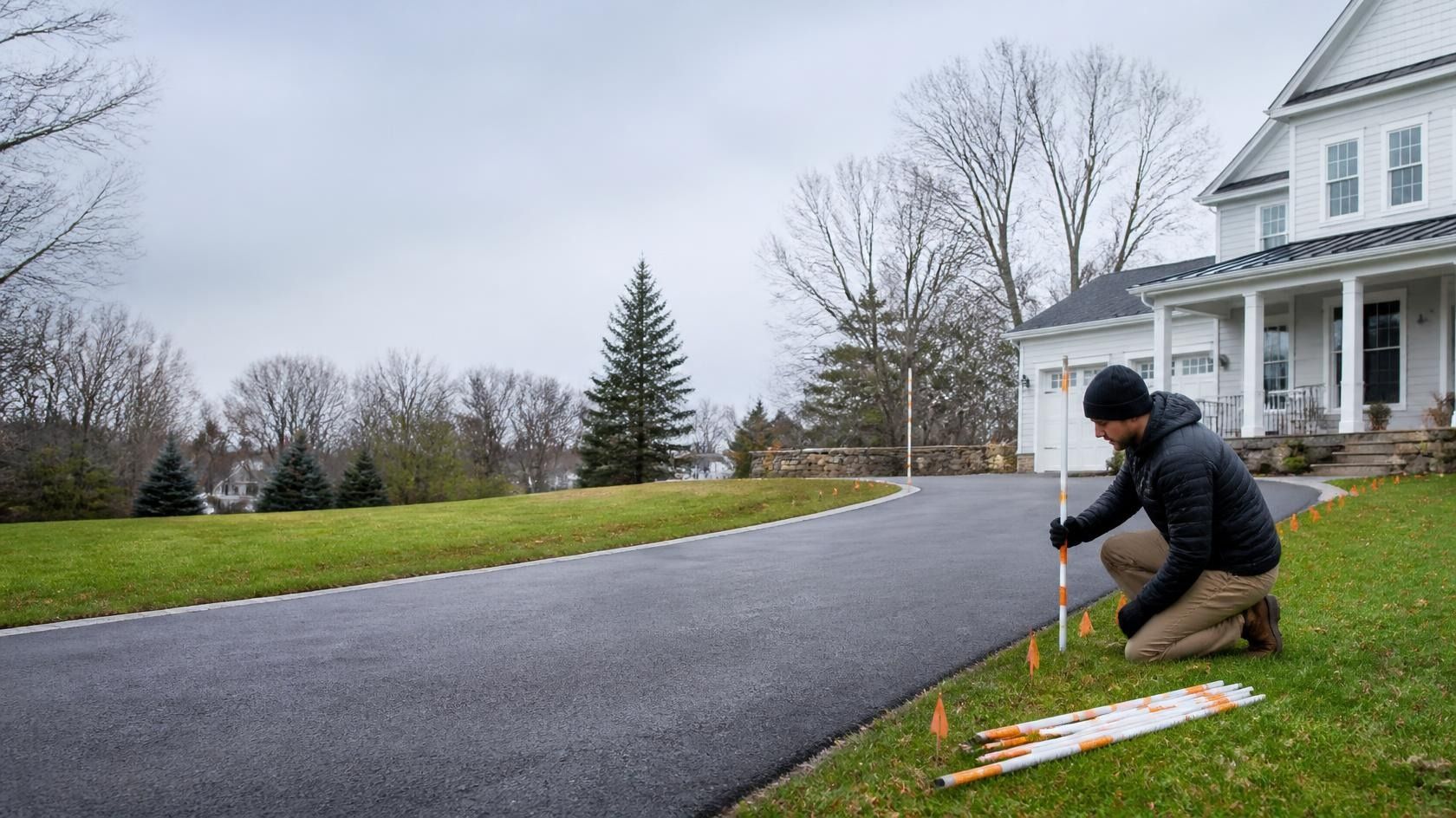
How to Mark Your Driveway and Lawn Before the First Plow in Andover, MA
The first real snow of the season usually shows up in Andover before you feel ready for it. The plow comes through early, often in the dark, with the ground already white and every edge hidden. If the driveway, lawn, and beds are not marked, that is when corners get clipped, sod gets peeled back, and sprinkler heads get snapped off. A handful of driveway markers for snow, set out now, costs a few dollars and keeps the plow off your grass, beds, and sprinkler heads. Here is how to mark your property before the first plow in Andover, MA.
Why do you need driveway markers for snow?
A plow works fast, and once snow covers the ground the driver cannot see where the pavement ends and your lawn begins. The same goes for you with a shovel or a blower at six in the morning. Markers draw a clear line between what should be cleared and what should be left alone. They protect the edge of the driveway, the grass beside it, and anything low to the ground that a blade can catch. In Andover, where storms often arrive back to back, one unmarked run can mean a spring of repairs to turf, edging, and irrigation.
Each thing the plow catches turns into a spring repair. A torn lawn edge means reseeding or new sod in spring. A clipped bed means replacing shrubs that took years to fill in. A snapped irrigation head means a service call before the system can run again. A few markers in the ground now head off all of it.
What to Mark Around Your Property
Walk the property before the snow and flag anything a plow or blower could reach:
- The full edge of the driveway, including the apron where it meets the street
- The turnaround and any spot where a plow backs up or swings wide
- Walkways, paths, and the front steps
- The lawn edge that runs alongside the driveway
- Garden beds, shrubs, and ornamental grasses close to the pavement
- Irrigation heads and valve boxes near the driveway and walk
- Low voltage light fixtures and the mailbox base
- Any drain, culvert, or utility cover that sits low to the ground
What are the best snow stakes to use?
You do not need anything fancy, just markers tall enough to show above the snow and sturdy enough to last the season:
- Fiberglass driveway markers, four to five feet tall, are the standard and hold up well in the cold
- Reflective tops or a strip of reflective tape help the plow driver see them at night
- Choose taller markers for a long or sloped driveway where snow piles higher
- Skip thin plastic stakes that snap in the first hard freeze
Bright colors like orange or yellow stand out against fresh snow and against a gray Andover sky, so the driver reads your boundaries at a glance.
Count enough markers to cover both sides of the driveway, spaced every eight to ten feet. Buy a few extra so you can swap in a replacement if a plow takes one out midwinter.
How to Place Them Before the Ground Freezes
Set your markers out while the soil is still soft, which in Andover usually means late October into November:
- Push each marker a foot or two outside the paved edge so the plow has room to work
- Space them every eight to ten feet along both sides of the driveway
- Add extra markers at corners, curves, and the turnaround where mistakes happen
- Mark both sides of the entrance where the plow first comes off the street
- Flag delicate shrubs and bed corners separately so they are easy to see
- Line the walkway edges the same way if they will be cleared
Walk the finished layout once from the street, the way the plow will see it. If a marker is hidden behind a shrub or sitting too close to the pavement, move it now while the ground is still soft.
Clear markers also make a professional crew faster and gentler on your property. T&B provides snow plowing in Andover and full winter services for local homeowners, and a well marked driveway lets the crew clear right up to the edge without guessing. Marking the property is a simple homeowner job, and it keeps every plow pass clear of your lawn and beds.
When should you put out driveway markers in Andover?
Set them out before the ground freezes and before the first plowable storm. In Andover that means getting it done by early to mid November most years. Once the soil hardens you cannot push a marker in without a fight, and once it snows you are placing them blind. A few minutes in October beats chipping at frozen ground in December.
A few markers and twenty minutes now save your lawn, beds, and irrigation all winter. If you want the plowing handled too, get on the schedule before the season fills. Request a free estimate or call (978) 296-5290 to set up snow service for your Andover property.
Driveway Marking FAQ
How far apart should snow stakes be?
Space markers every eight to ten feet along both sides of the driveway, and add a few more at corners, curves, and the entrance where a plow is most likely to drift off the edge.
Can you still put out driveway markers after the ground freezes?
It gets much harder. Frozen soil fights every stake, and fresh snow hides the edges you are trying to mark. If you are running late, start the hole with a drill or a metal rod, though setting markers in soft fall soil is far easier and more accurate.
Do reflective driveway markers help?
Yes. A reflective top or a strip of tape helps the plow driver see your markers in the dark and in blowing snow, which is exactly when most edge damage happens.